
When the Material Choice Matters
There’s a point in every residential development, usually somewhere between finalizing the facade and sourcing the site furniture, where someone has to make a call on the smaller elements. The gates. The bin stores. The bike sheds. The meter cupboards.
These things don’t make headlines. But they’re what residents interact with every single day. Get them wrong and the whole development feels cheaper than it is. Get them right, and they quietly reinforce everything the architect was trying to say.
For this project, the team got it right. And a big part of that came down to one decision: specifying aluminum expanded metal mesh from General Hardware Products, Inc.
Project Overview
Sector: Residential
Application: Gates, Storage Enclosures, Bike Sheds, Utility Panels
Material: Aluminum Expanded Metal Mesh
Supplier: General Hardware Products, Inc. (Quezon City, Metro Manila)
Finish: Powder-coated finish over mill-finish aluminum (no galvanizing required)
This was a multi-dwelling residential development, the kind of project where the brief goes beyond just building homes. Sustainability mattered. So did durability. And the design team wasn’t willing to let the quality drop just because something was “only” a gate or a storage enclosure.
The challenge, though, was real. The Philippine climate doesn’t forgive bad material choices. High humidity, intense UV, and the occasional typhoon don’t care how good something looks on a spec sheet. Whatever was going on, those gates had to hold up.
Aluminum expanded metal was the answer.
So, Why Aluminum? Here’s the Honest Case for It
Let’s be straight: not every project needs aluminum. Mild steel works fine in plenty of situations. Galvanized variants have their place. But for outdoor residential applications in the Philippines, especially anything that’s going to be touched, opened, rained on, and left in the sun for years, aluminum expanded metal has some advantages that are hard to argue with.
It’s light.
Noticeably lighter than steel. That matters more than people expect when you’re hanging gates or building enclosure panels. Lighter means easier to install, easier to operate, and less stress on whatever it’s attached to.
It doesn’t rust.
Not because of a coating, but because of what aluminum is. It forms its own protective oxide layer naturally. In a country where humidity is a year-round reality, that’s not a small thing. It’s the difference between a material that ages well and one that starts looking rough after a couple of wet seasons.
You can do a lot with it visually.
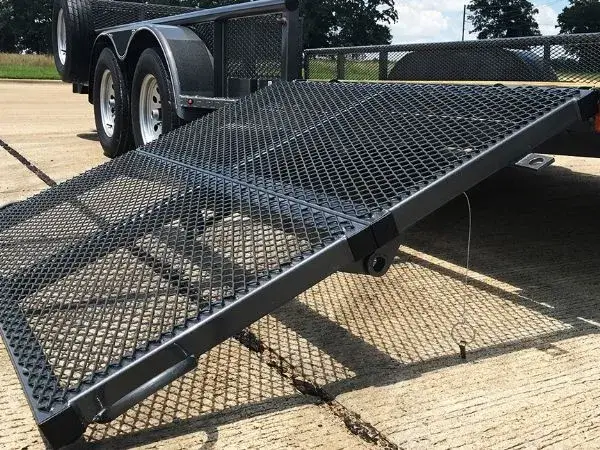
Powder-coat it, cut it to shape, adjust the aperture size, and mix it with other materials. Aluminum expanded metal mesh is flexible in ways that purely industrial products aren’t. For this project, the panels were powder-coated to match the development’s color palette exactly, so the gates and stores felt like part of the design, not additions to it.
And it’s stronger than it looks.
There’s a tendency to assume lightweight means weak. It doesn’t. Aluminum expanded metal holds its structure well for security fencing, gate panels, and enclosures, without loading down frames or fixings unnecessarily.
Picking the Right Mesh: More Involved Than You’d Think
Not all aluminum expanded metal mesh is the same. Strand width, aperture size, flattened vs. raised profile. These choices affect how the mesh performs, what it looks like, and how it handles fabrication and finishing.
For this project, the team at General Hardware worked through the options with the contractor to land on a pattern that suited the brief. The goal was an open-weave appearance, refined enough to fit the architectural vision, with enough structure to do the job securely. Ventilation and light filtration were important too, particularly for the bin stores and bike sheds.
A sample panel went to both the contractor and the lead designer for review before anything was confirmed. That step matters. Seeing the mesh in person, in the right light, against the right materials, is different from looking at a datasheet.
Once approved, panels were supplied in natural aluminum (self-color). The powder-coating happened on the fabricator’s side, applied after the mesh was fitted to the gate frames. That sequence, supply first and finish after fabrication, gave the team control over the final result and ensured a consistent coating across every element.
General Hardware supplied the mesh sheets only. All the cutting, framing, and fabrication were handled in-house by the contractor. That kind of supply-only flexibility is something General Hardware does well. They’re not trying to own the whole process, just provide the right material at the right spec and get it there on time.
Where the Aluminum Expanded Metal Went
The mesh ended up across more of the site than you might expect.
Entry Gates
Both swing and sliding configurations were used depending on the location. The mesh panels give the gates a consistent look at every entry point, secure but not oppressive. You can see through them, which is something residents appreciate. Nobody wants to feel like they’re living behind a wall.
Bin Enclosures
Poorly ventilated bin stores smell. Ones that aren’t maintained look bad fast. The aluminum expanded metal panels used here solve both issues. The open mesh allows airflow, the powder-coated finish is easy to clean, and the whole thing looks intentional rather than like an afterthought.
Bike Storage Sheds
Residents could see their bikes through the cladding without the shed being open to the elements or easy to break into. In the Philippines, where covered storage often means high humidity, aluminum’s natural corrosion resistance is a genuine practical advantage here too.
Meter Cupboard Panels
Using aluminum expanded metal mesh for the door faces means meter readers can check readings without opening anything. It’s a small detail, but a practical one, and it keeps the visual language consistent across the whole building.
How the Installation Went
Coordination was the main job. Each gate and enclosure element had its own sizing requirements, so mesh sheets needed to be cut accurately and fitted to welded frames before finishing could happen. Get the sizing wrong, and you’re reworking frames, which is not ideal on a live residential development.
General Hardware’s team stayed in regular contact with the fabricator throughout. Confirming strand thickness, aperture dimensions, sheet sizes, and making sure deliveries landed when they were needed. That kind of back-and-forth isn’t glamorous, but it’s what keeps a project on schedule.
Since the development was completed, the aluminum expanded metal installations have held up without issue. No rust. No warping. No maintenance calls. That’s exactly what you want from a material decision: to not think about it again after handover.
Design Cohesion: The Bit That’s Easy to Underestimate
Here’s something that doesn’t always get talked about: the visual weight of the “small” elements.
When every gate, every storage unit, every utility panel uses the same mesh pattern and the same powder-coat color, the result is a development that reads as considered from top to bottom. The aluminum expanded metal panels here weren’t fighting with the building. They were extending it. Same material logic, same tone, same detail quality.
That’s harder to achieve than it sounds. It requires someone making deliberate choices early, sticking to them throughout, and choosing materials flexible enough to carry a consistent finish across different applications and configurations.
Aluminum expanded metal did that job well here. During different times of day, as the light shifts, the open-weave structure catches and changes. It’s a material that has some life to it, not just a flat panel.
For architects working on residential projects in the Philippines, that balance between function and visual interest is increasingly what separates good-looking developments from forgettable ones.
Why General Hardware for Aluminum Expanded Metal in the Philippines
General Hardware Products, Inc. has been doing this since 1964. They’re based in Quezon City, Metro Manila, and they’re the Philippines’ first and still only specialist in expanded metal manufacturing. That’s over sixty years of knowing this product inside out.
What that means in practice: when you call them about aluminum expanded metal mesh, you’re talking to people who understand it. Not just the catalog specs but the real-world fabrication behavior, the finishing options, the right aperture for a given application.
For this project, they supplied sheet mesh to specification, stayed responsive through the coordination process, and delivered on time. That’s the job. They did it.
If you’re sourcing aluminum expanded metal in the Philippines, here’s what General Hardware can do for you:
- Wide range of mesh patterns and sheet sizes in aluminum
- Custom cutting and specification support
- Locally manufactured, consistent quality, no long import lead times
- Fast delivery across Metro Manila for qualifying orders
- Real technical advice on material selection, finishes, and application fit
Whether it’s an architectural facade, residential gates and enclosures, industrial screening, or something more specific, they’re worth a call.
The Bottom Line
Aluminum expanded metal worked on this project because it was the right material, properly specified, with the right supplier behind it. Corrosion resistance in a tropical climate. Design flexibility through powder-coating. Structural performance across gates, sheds, stores, and utility panels. And a visual result that made the whole development feel more resolved.
That’s what good material decisions look like. Not complicated. Just the right call, made early, executed well.
Get in touch with General Hardware Products, Inc.
Phone: +63 (02) 8911-0413 · 8912-9993 · 0954-334-6303 (Viber)
Email: genhardware128@gmail.com
Website: genhard.com